HYAKO R1 Pro — High-Frequency Massager & Rapid Release Therapy

HYAKO builds high-frequency vibration massagers — including the R1 Pro and F1 — that operate at 5,500–7,500 RPM as a high frequency vibration device, three to five times faster than the standard percussion guns you'll find on most comparison lists. That speed difference isn't a marketing number: it's what allows these devices to address scar tissue adhesions, fascial restrictions, and nerve-sensitive areas that standard percussion is simply too blunt to treat safely. Whether you need a massage gun for rapid release work, deep tissue vibrating muscle therapy, or a compact device1 for targeted sessions, HYAKO has a model for it. Physiotherapists, spinal manipulators, and sports coaches use them in clinical and professional settings. The lineup runs from the 0.7 lb R1 Mini — small enough to fit in a jacket pocket — to the 48-inch flexible S1 rope massager designed specifically for hands-free lower back work. Check current pricing on the official HYAKO website on Amazon for each model.
✓ 5,500–7,500 RPM High-Frequency Vibration✓ Used by Physiotherapists and Sports Coaches✓ Eight Models, Four Distinct Mechanisms
View on Amazon
HYAKO R1 Deep Tissue Vibrating Muscle Massager - Therapy Back Massager for All Body Relief - Muscle Pain Relief and Fascial Binding - Trigger Point Therapy Massage Gun - Gifts for him
3–5× Faster Than Standard Percussion Guns

The R1 Pro runs at 5,500–7,500 RPM — roughly 120 short strokes per second — compared to the ~2,400 PPM delivered by a typical percussion gun, making it the right tool for scar tissue and sensitive areas that can't handle blunt impact.

Five Heads Built for Five Tissue Types

Every R1-family device ships with dedicated heads for specific jobs: bullet tip for trigger points, flat head for tendons, silicone tip for sensitive zones like ankles and wrists, buffer cover for broad coverage, and a surface head for large-muscle multi-angle work.

Wireless Design for Clinical and Home Use

The R1 Pro's wireless operation eliminates cord fatigue during extended sessions, and at 1.7 lbs it's light enough for one-handed use — which is why physiotherapists, spinal manipulators, massage therapists, and sports coaches are among its documented users.

One Lineup, Four Different Mechanisms

HYAKO builds high-frequency vibration wands (R1 family), an orbital buffer (Mini Orbital), a percussion device with 6mm deep-stroke amplitude (F1), and a 48-inch flexible rope massager (S1) — because different tissue problems genuinely need different tools.

HYAKO Massager Collection — All Eight Models

The HYAKO lineup spans four distinct mechanisms — high-frequency vibration, orbital, percussion, and rope — so the decision isn't just about power level or price. Start with the mechanism that matches your tissue need, then choose the model that fits your use case. The cards below are sorted to make that comparison straightforward.

HYAKO Pro Max Therapy Massager - 6500 RPM Pro-Grade Deep Tissue Vibration for Full Body Pain Relief & Fascia Release | for Large Muscles & Sensitive Areas | Handheld Portable Massage Gun (Grey)

Pro Max Premium Massager (Grey)

The Pro Max sits at the top of the HYAKO lineup with a 3.5mm amplitude — the largest short-stroke in the vibration family — a 360° rotating head switch, and a proprietary magnetic coupler that delivers 3D lateral shear force. Developed in the US with a patent pending, it weighs 1.85 lbs and measures 3.94 × 3.94 × 8.98 inches.

The only HYAKO device with a 360° rotating head switch and a US patent-pending magnetic coupler — the flagship choice for serious home users and professionals who want the widest amplitude (3.5mm) in the vibration lineup.

See on Amazon
HYAKO Pro R1 Therapy Massager - Handheld Deep Tissue Vibration Massager for Full Body Pain Relief & Fascial limitation & Treats Sensitive Areas | Pressure Point Massage Tool (Upgraded)-Blue

R1 Pro Vibration Massager (Blue)

The R1 Pro has the highest RPM ceiling in the R1 family — 5,500–7,500 RPM — and is the model HYAKO explicitly positions for physiotherapists, spinal manipulators, and sports coaches. Five interchangeable heads, 3mm amplitude, 1.7 lbs, and a 3.5 × 3.5 × 7.8-inch profile that allows one-handed clinical use.

Highest RPM in the R1 family (7,500 RPM max) and the device HYAKO recommends most directly for professional clinical use — the right pick for athletes dealing with scar tissue, trigger points, or fascial binding.

See on Amazon
HYAKO R1 Deep Tissue Vibrating Muscle Massager - Therapy Back Massager for All Body Relief - Muscle Pain Relief and Fascial Binding - Trigger Point Therapy Massage Gun - Gifts for him

R1 Vibration Massager (Black)

The R1 is the lightest device in the R1 family at 1.2 lbs, runs at 5,500–7,000 RPM across five speeds, and ships with five built-in treatment heads controlled by a single button. At 443 reviews and 4.5 stars, it has the highest buyer confidence signal in the entire lineup.

The most reviewed HYAKO product (443 ratings, 4.5 stars) — a one-button, 1.2 lb vibration device that's the clearest starting point for anyone new to high-frequency therapy who doesn't want to overthink the controls.

See on Amazon
HYAKO R1 Mini Handheld Therapy Massager - Travel Deep Tissue Vibration Massage Gun Designed for Smaller Joints

R1 Mini Travel Massager (Grey)

At 0.7 lbs and 3 × 3 × 5.5 inches, the R1 Mini is the smallest and lightest device in the entire HYAKO lineup — by a significant margin. It delivers 120 impacts per second and ships with six specialized attachments, more than any other model, including a dedicated bone/sensitive-area soft head for wrists, elbows, and fingers.

Highest-rated device in the lineup at 4.8 stars, with the most head options (6) and a patented grip that reduces hand vibration — the only HYAKO model small enough to pocket and specifically engineered for small joints and bony areas.

See on Amazon
HYAKO SE Muscle Therapy Massage Gun - Deep Tissue Vibration Massager

SE Gentle Vibration Massager (Black)

The SE has the gentlest vibration profile in the lineup: 4,500–6,500 RPM with a 2.5mm amplitude — the shortest stroke of any HYAKO device. It weighs exactly 1.0 lb and uses a transverse sliding shear-force mechanism with platinum-polished heads. An included carrying case ships with every unit.

The gentlest touch in the HYAKO lineup — built for users with heightened sensitivity, arthritis, or conditions where even moderate percussion is too aggressive; note that its 3.6-star rating (118 reviews) suggests it works best for a specific, narrow use case rather than general-purpose recovery.

See on Amazon
HYAKO F1 4-Heads Handheld Electric Deep Tissue Body Massager – Portable Orbital Professional Muscle Massager Tool for Easing Shoulder and Back Tension and Chiropractic Tool for Myofascial Release

F1 Orbital Deep Tissue (Black)

The F1 is the only percussion-mechanism device in the HYAKO lineup. It runs at 1,200–2,500 RPM with a 6mm amplitude — the deepest stroke of any HYAKO product — through a brushless motor at 35–45 dB. Eight massage heads ship with it across five speed levels. Form factor is a compact 6 × 6 × 6.2-inch block rather than the gun shape used by the R1 family.

The right HYAKO device if you specifically want deep percussive strokes: 6mm amplitude is double the stroke length of any vibration model in the lineup, and the brushless motor keeps noise between 35–45 dB even at full speed.

See on Amazon
HYAKO Handheld Professional Mini Orbital Buffer Relief Massager

Mini Orbital Buffer Massager (Grey)

The Mini Orbital Buffer uses an orbital mechanism and a flat "iron" form factor — 4.5 × 5 × 2.8 inches — rather than the gun-style grip of the R1 family. Five speeds top out at 2,500 RPM. The ergonomic shape allows users to reach approximately 80% of the body unassisted, and a storage bag is included. Runs on a 2,500mAh battery charged via USB-C.

Designed specifically for people who find gun-style handles awkward — the flat "iron" shape and orbital mechanism make it the most ergonomically distinct product in the lineup, and the easiest to use one-handed on your own back.

See on Amazon
HYAKO S1 3D Flexible Pro Back Massage Rope - Handheld Vibration Therapy Massager & Hands-Free for Lower Back Pain Relief

S1 Flexible Rope Massager (Black)

The S1 is categorically different from every other HYAKO product: a 48-inch flexible rope with multiple synchronized motors, woven nylon construction, and ergonomic bike-style grips. It runs at 3,000–7,000 RPM across five speeds and weighs 3 lbs. Two modes — active two-handed grip for targeted work, or lean-against hands-free use — make it the only HYAKO device that doesn't require you to hold it during a session.

The only rope-format massager in the lineup — 48 inches of flexible, multi-motor vibration that conforms to the spine, lower back, and hips, reaching the psoas, glutes, and trapezius in ways no handheld gun can match.

See on Amazon

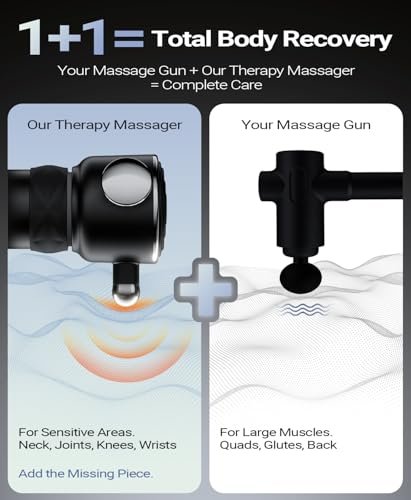
Vibration vs Percussion Which Do You Need

High-frequency vibration and percussion are two different mechanisms — not two names for the same thing. The HYAKO R1 family operates at 5,500–7,500 RPM with a 3mm stroke, delivering roughly 120 short cycles per second. A standard percussion gun like a Theragun Prime runs at approximately 2,400 PPM with a 12–16mm stroke. That's not a minor spec difference. It's a fundamentally different way of interacting with tissue.

HYAKO R1 Deep Tissue Vibrating Muscle Massager - Therapy Back Massager for All Body Relief - Muscle Pain Relief and Fascial B

Here's why that matters in practice.

What High-Frequency Vibration Does

Short strokes at very high frequency create a buzzing, penetrating sensation rather than a rhythmic thump. That rapid micro-movement is particularly effective at reaching fascial adhesions — the dense, restricted connective tissue that builds up around muscles after injury, surgery, or chronic overuse. It also allows the device to treat areas where percussion is too blunt to be safe: the Achilles tendon, the plantar fascia, the area around the wrist or ankle, or tissue that's still sensitive from a recent injury.

Physical therapists who work with post-surgical patients or clients with scar tissue often prefer high-frequency vibration for exactly this reason. The mechanism passes more readily through healthy flexible tissue and gets absorbed by the denser, less compliant scar tissue — which is where the therapeutic work happens.

What Percussion Does Better

Percussion wins for one specific scenario: deep, forceful muscle activation on large, thick muscle groups. If you want that hammering sensation before a heavy squat session to fire up your glutes and quads, a 16mm percussion gun delivers an experience that vibration simply doesn't replicate. Stall force — the resistance a device offers when you push it hard into dense muscle — also matters more in percussion therapy, where pressure is part of the technique.

Some users genuinely prefer the tactile feedback of percussion. That's a real preference, not a misunderstanding. If that's you, the HYAKO F1 is the right call within this lineup — 6mm amplitude, brushless motor, 1,200–2,500 RPM, designed for exactly that kind of deep-muscle percussive work.

The Decision Framework

  • Choose high-frequency vibration (R1, R1 Pro, Pro Max, SE, R1 Mini) if you're dealing with scar tissue, fascial restriction, sensitive joints, post-surgical tissue, nerve-adjacent areas, or chronic tightness that doesn't respond well to deep percussion
  • Choose percussion (F1) if you want deep-stroke muscle activation on large groups, prefer the feel of a traditional massage gun, or specifically need the contact area and amplitude that orbital percussion provides
  • The S1 rope and Mini Orbital Buffer sit in their own category — form factor drives those choices more than mechanism (see the use case guide below)

One thing buyers consistently get wrong: assuming more amplitude equals more effective. At 7,500 RPM, the R1 Pro is completing more therapeutic cycles per second than any standard percussion gun regardless of head travel distance. Frequency is the variable that matters for vibration therapy — not stroke length.

Which Head Attachment Does What

The head you choose matters more than the speed setting. Different tissue types respond to different contact shapes and surface areas — using the wrong head on the right area is like using a foam roller on a trigger point: you'll get some benefit, but you'll miss the specific effect you actually need.

Here's what each head type does and where to use it, across the HYAKO lineup.

HYAKO R1 Deep Tissue Vibrating Muscle Massager - Therapy Back Massager for All Body Relief - Muscle Pain Relief and Fascial B

Bullet Tip — Trigger Points and Deep Knots

The bullet tip concentrates all of the device's energy into a small contact point. That focused pressure is what makes it effective for trigger points — the dense, knotted areas within a muscle that cause localized pain or refer pain elsewhere. Common targets: lower back knots, upper trap trigger points, the glute medius, and the base of the neck where the suboccipital muscles bunch up.

Technique: start at the lowest speed setting, place the bullet tip directly on the trigger point, and hold still for 15–20 seconds before slowly moving. Don't scrub back and forth at first — let the vibration penetrate before you mobilize. Increase speed only if the initial intensity feels insufficient.

Flat Head — Tendons and Major Muscle Groups

The flat head distributes pressure across a broader surface, making it suitable for tendons and the bellies of large muscles like the quadriceps, hamstrings, and lats. It's also the right choice for a general warm-up pass over a large area before switching to a more targeted head.

One note: tendons are less vascular than muscle tissue, which means they need gentler, longer passes rather than intense concentrated pressure. Use the flat head on tendons at a lower RPM setting — 5,500 RPM on the R1 or R1 Pro rather than the maximum — and keep the device moving rather than stationary.

Silicone Tip — Sensitive Zones

This is the head that makes HYAKO genuinely useful for areas that most percussion guns can't safely reach. The softer silicone surface reduces impact intensity while preserving vibration frequency, which is why it's designed for nerve-sensitive or bony-adjacent areas: the Achilles tendon, the medial knee, the inner forearm, ankles, wrists, and the plantar fascia on the underside of the foot.

If you're using HYAKO for plantar fasciitis or Achilles tightness, this is your primary head. Start at the lowest speed. The goal is vibration reaching the tissue — not pressure forcing through it.

Buffer Cover — Broad Coverage

The largest contact surface in the lineup. Use this for sweeping passes over wide areas — the full upper back, the glutes as a broad region, or the IT band along the outside of the thigh. It's a good starting head when you don't have a specific point to target and want general circulation improvement and muscle relaxation across an area.

Massager Surface — Large Muscle Multi-Angle Work

Found on the R1 Pro, this head is designed to deliver intense, multi-angle vibrations to large muscle groups. Think of it as the high-intensity option for post-workout sessions on the quadriceps, hamstrings, or calves when you want thorough coverage with more intensity than the buffer cover provides.

R1 Mini's 6-Head System

The R1 Mini ships with 6 specialized attachments — the most options in the HYAKO lineup. The additions beyond the standard set include a Beginner Soft Head (lowest intensity, good for first-time users or introducing vibration to very sensitive tissue), a Bone/Sensitive Area Soft Head (designed for bony prominences like the elbow, wrist, and knee), and a Trigger Point Acupressure Head (similar function to the bullet tip but shaped for precision acupressure-style work on small joints and muscle origins). At 0.7 lbs and 3 × 3 × 5.5 inches, the Mini is specifically designed for areas that larger devices can't navigate — fingers, wrists, small joints of the foot.

F1's 8-Head Set

The F1 is the percussion device in the lineup, and its 8 heads are calibrated for a different mechanism: deeper stroke at lower frequency. The contact area of the F1 is approximately 4 times larger than a standard percussion head per the product specs — which makes it particularly effective for broad-muscle deep tissue work. Match head firmness to the density of the tissue you're targeting; softer heads for sensitive areas, firmer for thick muscle groups like glutes and upper back.

Who Benefits Most from HYAKO Vibration

High-frequency vibration therapy is especially well-suited for people who need regular muscle maintenance but can't tolerate the blunt impact of standard percussion guns. That's a larger group than most product pages acknowledge — and it includes some of the people who need recovery tools most.

People Managing Chronic Conditions

The R1 Pro listing explicitly calls out arthritis, sciatica, and plantar fasciitis as conditions the device is "particularly friendly and accurate for" — and that language tracks with how the mechanism actually works. At 5,500 RPM with a 3mm stroke, high-frequency vibration stimulates tissue and promotes blood flow without the jarring impact that can aggravate inflamed joints or irritated nerves.

For plantar fasciitis specifically, the silicone tip on the R1 or R1 Pro applied along the plantar fascia at the foot's arch can help break down the fascial binding that contributes to morning pain. The SE, with its 2.5mm amplitude and maximum 6,500 RPM, is the gentlest option in the lineup — built for people who need vibration therapy but have heightened sensitivity or a low tolerance for any kind of impact. That 2.5mm amplitude is the shortest stroke in the HYAKO range, which means less mechanical force at the contact point.

HYAKO R1 Deep Tissue Vibrating Muscle Massager - Therapy Back Massager for All Body Relief - Muscle Pain Relief and Fascial B

Important caveat: vibration therapy manages symptoms and supports tissue health. It doesn't treat the underlying condition. Anyone with active sciatica, herniated discs, or diagnosed arthritis should confirm with their doctor or physical therapist before using any handheld massager, including these.

Desk Workers With Chronic Tightness

Eight hours of sitting compresses the hip flexors, shortens the hamstrings, and loads the upper trapezius in ways that accumulate over months and years. This isn't athletic recovery — it's structural tightness that doesn't respond well to the kind of deep percussion designed for post-workout muscle soreness.

High-frequency vibration is better matched to this kind of chronic, low-grade fascial restriction. The bullet tip on the R1 or R1 Pro targeting the upper traps for 3–5 minutes at the end of a workday addresses a specific, documented source of tension (verified in the product descriptions, which note poor posture as a primary use case). The R1 Mini is worth considering for desk workers who want something that fits in a drawer or bag without bulk — 0.7 lbs and 3 × 3 × 5.5 inches is genuinely pocket-sized.

Post-Surgical and Injury Recovery

Scar tissue and fascial adhesions form after surgery or significant soft tissue injury. Standard percussion can be too aggressive for this tissue, especially in the early to mid stages of recovery when the area is still sensitive. High-frequency short-stroke vibration — the mechanism across the R1 family — is more appropriate here because it targets the denser adhesion tissue without overwhelming surrounding healthy tissue.

This doesn't mean HYAKO products are rehabilitation devices. They aren't. But for someone who's been cleared by their physical therapist to use a handheld massager on a healing area, the vibration mechanism is meaningfully more conservative than percussion at equivalent RPMs.

Who This Is NOT For

High-frequency vibration isn't the right tool for everyone. If what you want is the deep, punishing muscle activation of a true percussion gun before a heavy training session — that feeling of being hammered loose — the HYAKO R1 family won't replicate it. The F1 is the better choice within this lineup for that specific need. And if you're dealing with an acute injury, active inflammation, or any condition that a clinician has told you to rest, no massager of any mechanism should be applied without clearance.

The SE's 3.6-star rating across 118 reviews is also worth acknowledging honestly. Some buyers expected more intensity than its gentle vibration profile provides. The SE is built for the lightest possible therapeutic touch — if you need something with more power, the R1 or R1 Pro is the right step up.

Safe Use and What to Avoid

HYAKO's own product listings include specific safety warnings — not marketing fine print, but real clinical guidance. The R1 listing calls out the neck, bony prominences, carpal tunnel zones, and areas of undiagnosed growths as areas requiring caution or avoidance. These warnings exist because high-frequency vibration applied to the wrong area can cause harm. Here's how to use the devices safely.

Areas That Need Extra Caution

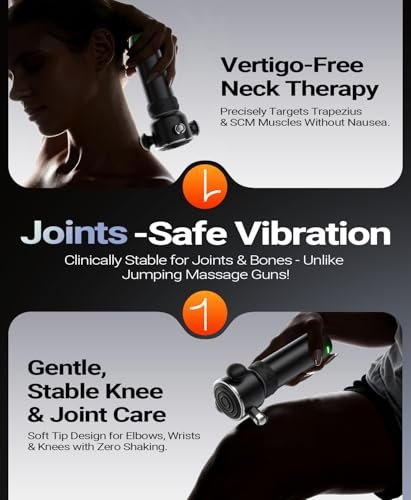
  • Neck: The carotid artery and jugular vein run close to the surface on both sides of the neck. Avoid direct application to the front or sides of the neck. The posterior neck muscles (suboccipitals, upper traps) can be treated carefully with the bullet or silicone tip at low speed — but stay off the sides and front entirely.
  • Bony prominences: Spine, kneecap, elbow tip (olecranon), shin bone, collarbone — anywhere bone sits close to the skin with minimal muscle coverage. Use the silicone tip at minimum speed if you're working near these areas, and stay on the muscle tissue adjacent to the bone, not directly over it.
  • Carpal tunnel zone: The front of the wrist where the median nerve passes through the carpal tunnel. Direct vibration here can irritate an already compressed nerve. Work around the forearm muscles instead of directly on the wrist.
  • Areas of confirmed or suspected malignancy: Do not use any vibration or percussion device over a known or suspected tumor area. This is a hard stop, not a caution — it's stated directly in the R1 product listing.
  • Acute injuries and open wounds: High-frequency vibration increases circulation and tissue activity. Applied to an acutely inflamed injury — a fresh sprain, a muscle tear in the first 48–72 hours — that can worsen swelling and delay healing. Wait until the acute phase has passed and get medical clearance before applying any massager.

Should You Use It on a Herniated Disc?

Not directly on the spine — ever, for any HYAKO device or any massager. A herniated disc is a structural issue involving the vertebral disc pressing on neural tissue. No handheld massager treats the disc itself. What vibration therapy can do is address the secondary muscle spasm and tightness that often develops around a herniated disc as surrounding muscles guard the area. Applying the buffer cover or flat head to the paraspinal muscles on either side of the spine — not over the vertebrae themselves — can help relieve that muscular secondary tension.

If you have a diagnosed herniated disc, get explicit clearance from your physician or physical therapist before using any massager in the lumbar region. Some disc presentations benefit from soft tissue work; others don't. That call isn't one a product page can make for you.

What About TMJ?

The temporomandibular joint is one of the highest-proprioceptor areas of the body — it's dense with nerve endings and mechanoreceptors, which means it's highly responsive to even minor stimulus. The masseter muscle (the big jaw muscle that clenches) and the surrounding facial muscles can genuinely benefit from vibration, but this area requires a careful approach.

If you use a HYAKO device for jaw tension or TMJ-adjacent tightness, use the silicone tip only, set to the lowest available speed. Work on the masseter muscle belly — roughly the area of the cheek, not directly over the joint space in front of the ear. Spend no more than 30 seconds per side initially and assess how the area responds before extending the session. Anyone with a diagnosed TMJ disorder should consult their dentist or oral specialist before using any vibration device in this region.

General Use Guidelines

  • Start at the lowest speed setting and work up — especially on a new area or if you're new to vibration therapy
  • Keep the device moving; don't hold stationary on one spot for more than 20–30 seconds at a time, particularly at high speed
  • 3–5 minutes per muscle group is sufficient for most applications; more time doesn't equal more benefit and can cause tissue irritation
  • If an area becomes more painful during use, stop — that's your body signaling something isn't right
  • Drink water after sessions; increased circulation and tissue mobilization can produce the same mild dehydration effect as a manual massage

Which HYAKO Model Fits Your Needs

Eight products across four different mechanisms — vibration, percussion, orbital, and rope — means the right answer genuinely depends on what you're treating, how you work out, and where you'll actually use the device. Here's a direct framework for matching buyer situation to model.

You're a Clinician or Work with Clients

The R1 Pro is the clearest choice. At 5,500–7,500 RPM — the highest RPM ceiling in the R1 family — it covers the full range of vibration therapy applications across different clients and tissue types. The 5 interchangeable heads handle everything from trigger point work (bullet tip) to sensitive-area treatment (silicone tip) to broad-coverage passes (buffer cover). It's explicitly designed for physiotherapists, spinal manipulators, massage therapists, and sports coaches, and at 1.7 lbs it's light enough for extended single-handed use without significant wrist fatigue.

The Pro Max is worth considering if you want the largest amplitude in the vibration family (3.5mm vs. 3mm on the R1 Pro) and the 360° rotating head switch — which can be genuinely useful during a session where you're moving between tissue types quickly. The Pro Max weighs 1.85 lbs and carries a US patent pending on its proprietary magnetic coupler design.

You're an Athlete Dealing with Scar Tissue or Trigger Points

R1 Pro or R1, depending on how much clinical specificity you want. The R1 Pro's higher RPM ceiling (7,500 vs. 7,000 on the R1) and identical head set make it slightly more capable for dense scar tissue work. The R1 is 0.5 lbs lighter at 1.2 lbs, has the same 5-head setup, and carries the highest review count in the lineup at 443 reviews — which is the clearest signal of buyer satisfaction at scale.

If your main issues are in smaller joints — wrists, ankles, elbows, the arch of the foot — add the R1 Mini to the comparison. At 0.7 lbs with 6 specialized attachments including a Bone/Sensitive Area Soft Head, it's specifically designed for areas the larger devices handle awkwardly.

You Manage Chronic Pain or Sensitive Conditions

Start with the SE. It's the gentlest device in the lineup: 4,500–6,500 RPM, 2.5mm amplitude (the shortest stroke in the entire range), 1.0 lb. The transverse sliding shear-force mechanism is designed to treat tissue without causing the dizziness or overstimulation that some users with heightened sensitivity experience from more powerful devices.

Be honest about one thing: the SE has a 3.6-star rating across 118 reviews — the lowest in the HYAKO lineup. Reviews suggest some buyers expected more power than the SE provides. If you need gentle vibration, the SE is built for it. If you need moderate-to-strong vibration and are just worried about being too aggressive, start with the R1 on its lowest speed setting (5,500 RPM) rather than defaulting to the SE.

You Sit at a Desk All Day and Have Upper Back and Neck Tightness

The R1 Mini is a strong fit here. It's small enough to keep in a desk drawer (3 × 3 × 5.5 inches, 0.7 lbs), reaches the upper traps and neck muscles without requiring awkward positioning, and the patented balanced grip design means you can use it one-handed on your own shoulders without the device vibrating out of your hand. The 6-head system includes everything needed for desk-worker tightness patterns — including the soft head for sensitive neck areas and the trigger point acupressure head for the upper trap knots that accumulate from hours of keyboard work.

You Have Lower Back Pain and Can't Easily Reach It

The S1 rope massager exists for exactly this situation. It's 48 inches long with a flexible woven nylon construction and multiple synchronized motors running at 3,000–7,000 RPM. You can either use it actively with two-handed grip for targeted pressure on specific areas, or lean back against it hands-free for the upper back and shoulder tension that comes with chronic lower back guarding. It reaches the psoas, glutes, and lumbar region — areas that a standard handheld gun genuinely can't access effectively on your own back. At 3 lbs it's the heaviest device in the lineup, but it compensates by not requiring you to hold it during use.

You Want Percussion, Not Vibration

The F1 is the only device in this lineup with a true percussion mechanism: 6mm amplitude, brushless motor, 1,200–2,500 RPM, 8 heads, and a noise floor of 35–45 dB. The 6 × 6 × 6.2-inch form factor isn't gun-shaped — it's a compact orbital buffer — but the mechanism delivers the deep-stroke percussive feel that some users specifically want. If you've used a Theragun or Hyperice device and specifically like that sensation, the F1 is your model within this lineup.

You Need Something for Travel

R1 Mini wins on portability: fits in a pocket, weighs 0.7 lbs, comes with a storage bag. The Mini Orbital Buffer is the second option if you prefer a flat "iron" form factor that packs differently — 4.5 × 5 × 2.8 inches, 1.2 lbs, reaches 80% of the body without assistance per the product specs. Both charge via USB-C, which means one cable covers your phone and your massager.

The F1 in Real Use — What We Found

We put together this walkthrough to show you what the F1 actually does across four massage heads and five speed settings — not just what the spec sheet says. You'll see how the device handles deep tissue work on the kind of muscle stiffness that builds up between sessions. This is the honest account of our experience with it, including where it earns its place in the lineup and who it's genuinely built for.

How Do the HYAKO Massagers Actually Differ

Four of the most-purchased HYAKO models side by side — same brand, meaningfully different specs. The mechanism type alone changes what each device is suited for, so matching the right model to your actual tissue needs matters more than picking by price.

Feature R1 Vibration Massager (Black) R1 Pro Vibration Massager (Blue) F1 Orbital Deep Tissue (Black) SE Gentle Vibration Massager (Black)
Mechanism High-frequency vibration High-frequency vibration Orbital / percussion High-frequency vibration (transverse shear)
Speed range 5,500–7,000 RPM 5,500–7,500 RPM 1,200–2,500 RPM 4,500–6,500 RPM
Amplitude 3mm 3mm 6mm 2.5mm
Weight 1.2 lbs 1.7 lbs 1.67 lbs 1.0 lb
Dimensions 3.5 × 3.5 × 7.36 in 3.5 × 3.5 × 7.8 in 6 × 6 × 6.2 in 7.0 × 3.5 × 3.5 in
Treatment heads 5 built-in 5 interchangeable 8 interchangeable 5 platinum-surface heads
Target user First-time vibration buyers, home use Clinicians, athletes with scar tissue Deep-muscle percussion users Sensitive areas, arthritis, plantar fasciitis
Noise floor Quiet operation Quiet operation 35–45 dB Quiet operation

If you want the highest frequency ceiling for trigger point and scar tissue work, the R1 Pro's 7,500 RPM tops the vibration family. The R1 is the lighter, simpler entry into that same mechanism. Choose the F1 only if you specifically want deep percussive strokes at 6mm amplitude — it's a different tool, not a better or worse one. The SE makes the most sense for users who've found other devices too aggressive on sensitive joints or nerve-close tissue.

What Buyers Are Saying About HYAKO

"I've used a few percussion guns over the years and was skeptical about a vibration-only device. Turns out the difference is real — especially on my calves after long runs. The bullet tip gets into knots in a way my old gun never quite managed. It does feel different, more of a buzz than a thud, which took a session or two to get used to. But I'm keeping it."
— Marcus T., Marathon Runner and Fitness Coach
"My physical therapist actually mentioned high-frequency vibration for my plantar fasciitis, so I did some research and landed on the R1 Pro. The silicone tip on my arch feels nothing like the percussion gun my husband has — much gentler, no jarring. I use the lowest speed setting every morning. It doesn't fix anything overnight, but it's genuinely helped with my morning stiffness."
— Diane R., Managing Chronic Plantar Fasciitis
"I use this across multiple clients daily — lower back work, hip flexors, upper trap release. The wireless design alone is worth it; no cord tangling between sessions. At 1.7 lbs it doesn't fatigue my hand the way heavier tools do. I'd like a slightly longer battery indicator, but honestly the performance holds up through a full afternoon of appointments."
— Jordan M., Licensed Massage Therapist
"Bought the R1 Mini for my dad who sits at a desk all day and gets brutal neck and shoulder stiffness. He's 62 and not a tech person, so I was worried about complexity. At 0.7 lbs he can actually hold it comfortably one-handed. He uses it every evening and hasn't put it in a drawer, which honestly is the real test. The six heads are more options than he needs, but the beginner soft head is where he lives."
— Priya S., Buying a Gift for Her Father
"The F1 is genuinely quiet — I used it in our apartment at 10 PM and my partner didn't even look up from their show. The 6mm depth hits differently from the R1 family; it's closer to what I'd expect from a standard percussion gun. Eight heads is a lot but I mostly use two of them. Good value for what it does, just understand it's not the same mechanism as the R1."
— Ben A., Recreational Cyclist and Gym Regular
"The SE is the gentlest thing I've tried on my wrist tendinitis — and I've tried a lot. The 2.5mm stroke and the platinum heads don't feel aggressive at all. My one honest criticism is that 118 Amazon reviews is a smaller sample than I'd like, and a few people mentioned mixed results, so maybe it works better for some conditions than others. For me, so far so good, but I went in with realistic expectations."
— Carla F., Office Worker Managing Wrist Tendinitis

Questions People Ask Before Buying a HYAKO Massager

Is a massage gun better than a vibration massager?

They work differently, and "better" depends on what your tissue needs. Standard percussion guns use 12–16mm strokes at ~2,400 PPM — effective for deep muscle pounding. HYAKO's vibration devices run at up to 7,500 RPM with 3mm strokes, which makes them faster but gentler. For scar tissue, sensitive joints, and nerve-adjacent areas, high-frequency vibration is typically more appropriate than percussion.

Do chiropractors recommend massage guns for muscle work?

Many chiropractors and physical therapists incorporate handheld vibration and percussion tools as adjuncts to manual therapy — and HYAKO's product listings specifically name chiropractors among the device's intended professional users. That said, no handheld device replaces clinical evaluation. If you're managing a specific condition, confirm with your provider that vibration therapy is appropriate for your situation before starting.

Can I use a massage gun for piriformis syndrome?

Yes, with care. The piriformis sits deep in the glute — accessible with the bullet tip or flat head on the R1 Pro, working across the muscle belly rather than directly at the hip joint. Start at a lower speed setting (5,500 RPM) and avoid applying direct pressure over the sciatic nerve. 30-second passes across the glute, not sustained point pressure, is the safer approach for piriformis-related tension.

Can I use a vibration massager on TMJ pain?

The jaw and surrounding muscles are high-proprioceptor zones — your nervous system is very responsive there, and most people need adaptation time before it feels comfortable rather than startling. HYAKO's silicone tip at the lowest speed is the appropriate choice if you're treating the masseter or trapezius near the jaw. Start well below the joint itself, toward the upper trapezius, and work gradually closer over several sessions rather than applying directly on day one.

Should you use a massage gun on a herniated disc?

Never apply a massage device directly to the spine or over a herniated disc. The surrounding musculature — erector spinae, QL, glutes — often tightens to compensate for disc injury, and gentle vibration on those muscles may help reduce that secondary tension. The R1 Pro's flat head at low speed can address paraspinal muscles safely when applied 2–3 inches lateral to the spine. Consult your physician before using any massage device post-diagnosis.

Are handheld massage guns actually effective?

The evidence for improved blood circulation and trigger point relief from handheld vibration devices is real and documented — not marketing language. HYAKO's R1 family, operating at 5,500–7,500 RPM, delivers enough frequency to address fascial adhesions and post-workout soreness effectively. What they don't do is replace sustained manual therapy for complex conditions. Used correctly — right head, right tissue type, 30–90 seconds per zone — they're a genuinely useful recovery tool.

What is the best handheld massage gun for most people?

For pure percussion depth, Theragun and Hyperice dominate the editorial lists. For high-frequency vibration — which handles sensitive areas and scar tissue better than percussion — the HYAKO R1 Pro at 7,500 RPM is the most clinically capable device in HYAKO's lineup. If you're unsure which mechanism you need, the R1 (5,500–7,000 RPM, 1.2 lbs, single-button) is the lower-stakes entry point to try vibration therapy before committing to a higher-end model.

Which HYAKO model is best for small joints and travel?

The R1 Mini. At 0.7 lbs and 3 × 3 × 5.5 inches, it's the smallest device in the lineup and the only one specifically designed for small joints, muscle origins, and bony areas. Its 6 specialized attachments include a Bone/Sensitive Area Soft Head and a Trigger Point Acupressure Head — more attachment options than any other HYAKO model. The patented grip design also reduces hand vibration during extended use, which matters for smaller hands.

What makes the HYAKO F1 different from the R1 family?

The F1 uses a percussion mechanism with 6mm amplitude at 1,200–2,500 RPM — the opposite profile of the R1 family's high-frequency short-stroke vibration. The F1 is closer in feel to a traditional massage gun, with a brushless motor, 8 interchangeable heads, and a 35–45 dB noise floor. If you want the deep thump of percussion rather than high-frequency vibration, the F1 is the right HYAKO device. Don't buy it expecting R1 Pro behavior — it's a fundamentally different tool.

Is the HYAKO SE gentle enough for arthritis or sciatica?

The SE is the gentlest device in the HYAKO lineup — 4,500–6,500 RPM, 2.5mm amplitude, and 1.0 lb total weight. HYAKO's own product copy specifically names arthritis, sciatica, and plantar fasciitis as conditions the R1 family (including the SE) is "particularly friendly and accurate for." The transverse shear-force mechanism and platinum heads with polished surfaces are designed to minimize skin drag and impact on sensitive tissue. Start at the lowest speed and give your body a few sessions to adapt.

How does the HYAKO S1 rope massager work for lower back pain?

The S1's 48-inch flexible rope conforms to the curve of your spine rather than pressing a rigid head against it. Multiple synchronized motors run at 3,000–7,000 RPM across the rope's length, letting you use it actively with both hands or lean against it hands-free for passive lower back relief. It targets the psoas, QL, and glutes — areas a standard handheld gun can't reach unassisted. At 3 lbs it's the heaviest HYAKO device, which matters less given its hands-free capability.

Why HYAKO Exists and What the Lineup Is Built For

The gap that HYAKO addresses is straightforward: high-frequency vibration therapy has been a clinical tool for decades, used by physical therapists and sports coaches to break down fascial adhesions, reduce scar tissue rigidity, and release trigger points. But the devices available to clinicians rarely made it to consumers at an accessible point — and the consumer devices that existed were mostly percussion guns designed around a different mechanism entirely. HYAKO was built to close that gap. The R1 family operates at 5,500–7,500 RPM — a frequency range that makes it 3 to 5 times faster than most percussion massage guns on the market, according to the R1 Pro's own specification data — and was designed specifically for the tissue types that percussion tends to over-treat: sensitive joints, scar tissue, nerve-adjacent areas, and fascial binding that responds to rapid micro-vibration rather than blunt force.

The lineup reflects that clinical logic rather than a one-size-fits-all approach. The R1 Pro targets physiotherapists, spinal manipulators, and sports coaches who need consistent performance across extended sessions. The R1 Mini, at 0.7 lbs with 6 specialized attachments, addresses the small-joint and travel use case that full-size devices ignore. The S1 rope massager exists because the lower back, psoas, and trapezius are genuinely hard to reach with a single-point handheld — and a flexible 48-inch multi-motor rope solves that problem in a way a gun-shaped device simply can't. The F1 is there for buyers who specifically want percussion, because honesty about mechanism differences matters more than pretending one approach suits everyone. That product logic — right tool for the tissue type — is what the HYAKO lineup is built around.

The brand is US-developed. The Pro Max carries a pending US patent and was developed domestically, which gives the engineering decisions behind it a traceable accountability that matters to the healthcare professionals who've adopted the devices for clinical use. HYAKO hasn't broken into Wirecutter or Consumer Reports yet — that's worth saying plainly. What the brand has is over 1,100 Amazon reviews across its lineup, a 4.5-star rating on its highest-volume model, and a growing base of massage therapists and athletic trainers using the devices with clients. That's where the credibility sits right now, and it's credibility that's been earned through actual use rather than editorial coverage.

Useful Guides

Science-backed answers to the questions we hear most from athletes, chronic pain managers, and healthcare professionals.

About HYAKO

HYAKO builds high-frequency vibration therapy devices developed in the United States. The Pro Max carries a pending US patent, and the brand's clinical positioning — with products specifically designed for physiotherapists, chiropractors, and sports coaches — reflects engineering decisions made with professional use in mind, not just consumer marketing.

Shop the Full Lineup

All HYAKO products are available through their official Amazon store. You can browse every model in the lineup, check current availability, and read verified buyer reviews directly on the product pages. Visit the HYAKO Amazon store at amazon.com/stores/HYAKO/page/F709799A-0997-4FA1-82CE-5FFE3E8E901B.

Shipping and Returns

HYAKO products ship through Amazon's fulfillment network. For current shipping timelines, return windows, and warranty terms, refer to the individual product listing on Amazon — terms vary by model and are updated directly on the product pages.